
On his 200th birth anniversary, Utkarsh Mishra traces the life, thought, and legacy of Dadabhai Naoroji, the Grand Old Man of India.

Introducing the bill, Rijiju said the consultation process of the Joint Parliamentary Committee (JPC) was the largest ever exercise carried out by a parliamentary panel in India's democratic history.

The Bombay High Court has ruled that the use of loudspeakers is not an essential part of any religion and has directed law enforcement agencies to take prompt action against loudspeakers that violate noise pollution norms. The court also ordered the state government to direct religious institutions to adopt mechanisms for controlling noise levels, including calibrated sound systems with auto-decibel limits. The decision came in response to a petition filed by two housing associations alleging police inaction against noise pollution caused by loudspeakers installed on mosques in the area.

A bench of Justices Navin Chawla and Shalinder Kaur rejected the petition by the Indian Army Lieutenant, who served as a 'Troop Leader' of a squadron, against the termination order passed on March 3, 2021, that dismissed him from the Indian Army without pension and gratuity.

'Why have we failed to address the issue of ensuring a requisite buffer zone in J&K, given that cross-border links of some J&K politicians are known?', asks Lieutenant General Prakash Katoch (retd).

Quraishi asserted that India has, is and will always stand up and fight for its constitutional institutions and principles.
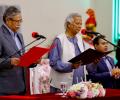
The chief adviser alleged elections held under Hasina's regime were "rigged blatantly and generations of young people grew up without exercising their voting rights."

A private school in Shimla, Himachal Pradesh, withdrew its decision to ask students to wear "kurta-pajama" and bring special food for Eid-ul-Fitr celebrations after it sparked a row with a local right-wing organization and some religious groups. The school said it was intended as a cultural learning experience and that participation was voluntary. The school also condemned attempts to misrepresent the event as religious propaganda and urged individuals to remove false and inflammatory messages on social media.

The Supreme Court of India has reserved its interim orders on three key issues related to the Waqf (Amendment) Act, 2025, including the power to denotify waqf properties, the composition of waqf boards, and the provision regarding government land. The court heard arguments from both the petitioners, who challenged the validity of the amended law, and the Centre, which defended the Act as a secular concept. The petitioners sought interim orders to prevent the implementation of certain provisions while the court considers the legal challenges.

A controversy has erupted after an NCERT Class 8 textbook depicted present-day Rajasthan as part of the Maratha Empire, drawing criticism from royal families and political leaders who call the depiction factually incorrect and misleading.

The Delhi High Court has dropped charges against 70 Indian nationals accused of housing foreign attendees of Tablighi Jamaat congregation in March 2020 allegedly in violation of COVID-19 norms, citing lack of evidence.

Seeking clarification, Karnataka Governor has sent back to the government a bill that sought to collect funds from temples with over Rs 10 lakh annual income, citing that a case concerning the earlier related act and amendments made to it is still pending in Supreme Court.

'These efforts by Beijing can be weaponised one day with economic, security and political implications for India.'

'The BJP lacks a credible mass leader who matches Mamata Banerjee's popularity.' 'Given the division of votes among Opposition parties, the West Bengal government's dole-giving strategy, and the consolidation of the poor, significant sections of scheduled caste groups and Muslim minorities behind the ruling party, it will be difficult to dislodge the Trinamool from power.'
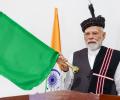
In the last 11 years, India and the world witnessed what he stood for, what he promised and did not deliver, and what he actually stood for and practised without fearing how history would judge him. Modi's tenure has been punctuated with headline-grabbing decisions, symbolic gestures, and stage-managed moments that continue to define his leadership and India's politics, points out Ramesh Menon.

On July 2 or July 6, the Dalai Lama will reveal his mind on his successor. This makes Beijing extremely nervous as the Communist regime fully realises the importance of controlling the next Dalai Lama, points out Claude Arpi.

'We are now in a situation where our country is not yet free.' 'China is still very strong and militarily powerful.' 'In such a situation, we need the Dalai Lama to bring about a resolution to the cause of Tibet.' 'That's one of the main reasons that at age 90, he has accepted that there should be a 15th Dalai Lama after him.'

Bookstore owners were cautioned against keeping or distributing the books. Police personnel briefed the bookstore owners about the legal consequences of violating the ban.
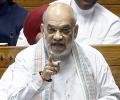
The Lok Sabha passed the Waqf (Amendment) Bill, 2025, with the ruling NDA defending it as beneficial for minorities while the opposition called it "anti-Muslim". All amendments moved by the opposition were rejected and the bill was passed with 288 votes in favor and 232 against. Union Minorities Affairs Minister Kiren Rijiju asserted that India is the safest place in the world for minorities, refuting claims of their insecurity.

Bangladesh's Chief Adviser Muhammad Yunus announced that the next general election will be held in February 2026, marking the first anniversary of the 'July Uprising'.

The finance ministry has said that the Goods and Services Tax will not apply on room rents of 'sarais' (inns) or properties managed by religious and charitable institutions. The clarification was issued by the Central Board of Indirect Taxes and Customs (CBIC) on Thursday evening to clear the confusion with regard to the levy of GST on room rents. This clarification by the Finance Ministry came following a demand from various quarters including AAP MP Raghav Chadha that the GST on rooms rented by religious institutions be withdrawn.

'At Keeladi, we have not come across any evidence for organised religion.'
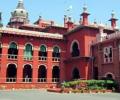
It noted that Article 15(5) of the Constitution does not empower the State to compel a minority educational institution to admit students from the Scheduled Castes or Scheduled Tribes or Backward Classes of citizens.

It said AMU is not and cannot be a university of any particular religion or religious denomination as any university which has been declared an institution of national importance cannot be a minority institution.
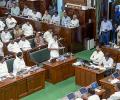
The Tamil Nadu Assembly passed a resolution on Thursday condemning the Centre's proposed Waqf Amendment Bill 2024, calling for its recall. Chief Minister M K Stalin argued that the amendment interferes with religious affairs and would negatively impact the Muslim minority. The resolution was unanimously passed by the Assembly, with support from all parties, including the opposition AIADMK and PMK. The BJP, however, walked out in protest, accusing the ruling DMK of engaging in divisive politics. The bill aims to streamline the Waqf Board's work and ensure efficient management of Waqf properties but has been criticized for potentially encroaching on religious freedom and autonomy. The Tamil Nadu government claims that the amendment would lead to government control over the Waqf Board and its properties, impacting its autonomy and potentially allowing for government acquisition of Muslim-owned lands.
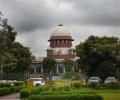
The Supreme Court of India will likely hear a batch of petitions challenging the constitutional validity of the Waqf (Amendment) Act, 2025 on April 15. The Act, which came into force on April 8, has been met with widespread criticism from various stakeholders, including politicians, the All India Muslim Personal Law Board (AIMPLB), and Jamiat Ulama-i-Hind. They argue that the law is discriminatory and violates the fundamental rights guaranteed under Articles 25 and 26 of the Constitution. The petitions allege that the amendments give the government more control over the administration of Waqf, effectively sidelining the Muslim minority from managing their own religious endowments.

'Although China has been ruling over Tibet for past 75 years, it has no legitimacy.'

A three-judge Supreme Court bench will hear petitions challenging the constitutional validity of the Waqf (Amendment) Act, 2025, on April 16. The petitions, including those by politicians and the All India Muslim Personal Law Board (AIMPLB) and Jamiat Ulama-i-Hind, were filed in the top court challenging the validity of the newly-enacted law. The Centre has filed a caveat in the apex court, seeking a hearing before any order is passed.

The Calcutta high court on Thursday granted interim bail to social media influencer Sharmistha Panoli, who was arrested by the Kolkata police for allegedly uploading a video with communal comments.
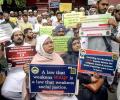
'The new Waqf bill sows the seed for conflict in every town and village of India.'

'The state government does not believe in disallowing non-Hindus to do business outside Hindu temples.'
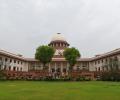
The Indian government has defended the Waqf (Amendment) Act, 2025 in the Supreme Court, arguing that there cannot be a blanket stay on the law as there is a presumption of its constitutionality. The Centre countered the pleas challenging the law's validity, asserting that the amendments were undertaken after a comprehensive study by a parliamentary panel. The government also highlighted the "reported misuse" of earlier provisions and the increase in waqf land, claiming that over 20 lakh hectares were added after 2013.

The Committee of Management, Shahi Jama Masjid, moved the high court challenging the suit and the Sambhal court order which directed the survey through an advocate commissioner.
'Once bitten, twice shy, I didn't take up the challenge this time...' 'I realised I had failed to follow my karma because I feared failure.'
Kharge claimed that the Centre accepted "intelligence failure" in an all-party meeting and said it should be held accountable for "not reinforcing" security arrangements in Kashmir to protect people.

The bill was defeated by a voice vote on February 23 in the upper house, where the Opposition has a majority, after it was passed by the assembly on February 21.

India's hospitality sector is rolling out the red carpet for investors. A flurry of upcoming IPOs, or initial public offerings, the entry of new players, and ambitious expansion plans by Indian and global hotel brands are ushering in what could be the industry's most formalised era yet. Leading the charge are real estate titans, who are turning their hotel arms into global hospitality chains.

"Karnataka has always forged inclusive economic development and we must not allow such communal exclusion- If ITBT became communal it would destroy our global leadership. @BSBommai please resolve this growing religious divide," Mazumdar-Shaw said.
Muhammad Yunus urged the people to "exercise patience" before judging his government's role.

The Supreme Court of India began hearing a batch of petitions challenging the constitutional validity of the Waqf (Amendment) Act, 2025. The bench, led by Chief Justice Sanjiv Khanna, asked both sides to address whether the court should entertain the petitions or relegate them to the high court. The hearing is underway with senior advocate Kapil Sibal arguing for the petitioners. The act, which was passed by Parliament following heated debates, has been challenged by various parties including AIMIM leader Asaduddin Owaisi, All India Muslim Personal Law Board (AIMPLB), and Jamiat Ulama-i-Hind.
